






Recent Public Posts - [guest]
| Re: Bristol Temple Meads - station, facilities, incidents and events (merged posts) In "Bristol and Bath (WECA, now WEMCA)" [379155/10737/21] Posted by chuffed at 22:47, 4th September 2026 |      |
I intend to be there.
| Re: North Cotswold line delays and cancellations - 2026 In "London to the Cotswolds" [379154/31371/14] Posted by Richard Fairhurst at 22:42, 4th September 2026 | |
Lots of cancellations and late running this evening due to a "passenger on the track" at Charlbury which I believe may not have been happy circumstances, I'm afraid. Half a dozen police cars down at the station earlier.
| Bristol Temple Meads station - official opening of new Eastern entrance In "Diary - what's happening when?" [379153/32457/34] Posted by Chris from Nailsea at 21:54, 4th September 2026 | |
See https://www.firstgreatwestern.info/coffeeshop/index.php?topic=10737.msg379069#msg379069
| Re: Bristol Temple Meads - station, facilities, incidents and events (merged posts) In "Bristol and Bath (WECA, now WEMCA)" [379152/10737/21] Posted by Chris from Nailsea at 21:33, 4th September 2026 | |

I'm rather inclined to pop along to Bristol Temple Meads next Monday afternoon to see the official opening.
Will any other members - or indeed guests - of the Coffee Shop also be there?
Chris from Nailsea.

| Re: Class 175s to Great Western Railway (GWR) In "Across the West" [379150/28982/26] Posted by bobm at 20:56, 4th September 2026 | |
Looking at the temporary timetable, it largely reflects what has been happening over the last few weeks. As has been said it just removes the seemingly inevitable last minute cancellations.
| To 'stockpile food' is now our Government's official policy, apparently In "The West - but NOT trains in the West" [379149/32456/31] Posted by Chris from Nailsea at 20:52, 4th September 2026 | |
From the BBC:
Stock up on food to prepare for extreme weather, minister says
Households should stock up on food to prepare for extreme weather as the strongest El Niño event in a generation develops over the Pacific Ocean, a government minister has said.
Environment Secretary Dame Angela Eagle told the Guardian the powerful natural climate phenomenon will lead to "more extreme storms in this country". Her comments came as the National Audit Office (NAO) warned Britain's food supply chain is at risk given the growing threat of cyber-attacks and the climate crisis.
The NAO said the government was too reliant on the private sector to deal with food supply disruption. The government is due to unveil a strategy about preparing for national emergencies later this year.
Dame Angela said "We're about to experience probably the largest El Niño that has ever been seen, and that will lead to drier summers, wetter winters, with more extreme storms in this country.
"It will do a lot more damage in Asia with flooding, and therefore I think that we need to take it seriously. If you've got a store of a bit of food that can keep you going for a while before the emergency services can get to you, you're going to be a lot better off than if you haven't. So some of it is that kind of preparation for just being a bit more resilient."
Her comments came as an NAO report warned Britain's food supply chain is vulnerable to plant or human disease outbreaks, cyber-attacks and extreme weather. It also cited climate change as a longer-term chronic risk which could leave Britain's food supply at risk. The disruptions could push up prices and leave vulnerable people struggling to buy food, it said.
The NAO said the Department for Food, the Environment and Rural Affairs (Defra) was too reliant on private companies to handle disruptions to food supply. It added the department had not done enough in recent years to improve supply chain resilience.
UK households are less prepared for emergencies than those in several other countries such as Finland, Sweden and European Union nations, the NAO added. It said ministers should encourage households to prepare for supply chain disruptions and learn from the approaches taken by other countries.
Households should stock up on food to prepare for extreme weather as the strongest El Niño event in a generation develops over the Pacific Ocean, a government minister has said.
Environment Secretary Dame Angela Eagle told the Guardian the powerful natural climate phenomenon will lead to "more extreme storms in this country". Her comments came as the National Audit Office (NAO) warned Britain's food supply chain is at risk given the growing threat of cyber-attacks and the climate crisis.
The NAO said the government was too reliant on the private sector to deal with food supply disruption. The government is due to unveil a strategy about preparing for national emergencies later this year.
Dame Angela said "We're about to experience probably the largest El Niño that has ever been seen, and that will lead to drier summers, wetter winters, with more extreme storms in this country.
"It will do a lot more damage in Asia with flooding, and therefore I think that we need to take it seriously. If you've got a store of a bit of food that can keep you going for a while before the emergency services can get to you, you're going to be a lot better off than if you haven't. So some of it is that kind of preparation for just being a bit more resilient."
Her comments came as an NAO report warned Britain's food supply chain is vulnerable to plant or human disease outbreaks, cyber-attacks and extreme weather. It also cited climate change as a longer-term chronic risk which could leave Britain's food supply at risk. The disruptions could push up prices and leave vulnerable people struggling to buy food, it said.
The NAO said the Department for Food, the Environment and Rural Affairs (Defra) was too reliant on private companies to handle disruptions to food supply. It added the department had not done enough in recent years to improve supply chain resilience.
UK households are less prepared for emergencies than those in several other countries such as Finland, Sweden and European Union nations, the NAO added. It said ministers should encourage households to prepare for supply chain disruptions and learn from the approaches taken by other countries.
| Re: Class 175s to Great Western Railway (GWR) In "Across the West" [379148/28982/26] Posted by grahame at 20:33, 4th September 2026 | |
BBC take on the story - https://www.bbc.co.uk/news/articles/c1wxdz8ev7do?
A number of rail journeys will be cancelled across Devon and Cornwall from next week due to recurring issues with a fleet of trains, a rail operator has said.
Great Western Railway (GWR) said five weekday services will be cancelled between Penzance and Plymouth/Exeter from Monday.
The issue is down to the company's Class 175 fleet, which it said had been "challenging from a reliability perspective," prompting too many cancellations for customers.
The operator said it understood the timetable changes would be "frustrating for customers" but believed the move would "provide a more reliable service in the short term" while it worked to bring its fleet up to standard.
The Class 175 trains entered service in 2000, when they were used by Transport for Wales.
GWR brought in 26 of them last year to replace older diesel trains, with hopes to reduce costs and pollution.
The trains, however, had been "out of service for a prolonged period" before transferring to GWR, "requiring more recommissioning work than anticipated", a spokesperson for the operator said.
Great Western Railway (GWR) said five weekday services will be cancelled between Penzance and Plymouth/Exeter from Monday.
The issue is down to the company's Class 175 fleet, which it said had been "challenging from a reliability perspective," prompting too many cancellations for customers.
The operator said it understood the timetable changes would be "frustrating for customers" but believed the move would "provide a more reliable service in the short term" while it worked to bring its fleet up to standard.
The Class 175 trains entered service in 2000, when they were used by Transport for Wales.
GWR brought in 26 of them last year to replace older diesel trains, with hopes to reduce costs and pollution.
The trains, however, had been "out of service for a prolonged period" before transferring to GWR, "requiring more recommissioning work than anticipated", a spokesperson for the operator said.
| Re: Congestion on the Melksham single line overnight - 04 Sep 26 In "TransWilts line - Swindon, Chippenham, Melksham, Trowbridge, Westbury, Salisbury" [379147/32455/18] Posted by bobm at 20:04, 4th September 2026 | |
One benefit of being laid up with a heavy cold and being kept awake with frequent coughing fits!
| Re: New station at North Filton - now named as 'Bristol Brabazon' - ongoing discussion In "Bristol and Bath (WECA, now WEMCA)" [379146/24927/21] Posted by XPT at 19:56, 4th September 2026 | |
According to this article, the station is now in it's final stages of construction and still on course for opening this autumn.
https://www.networkrailmediacentre.co.uk/news/community-invited-to-drop-in-event-as-bristol-brabazon-station-enters-final-stages-of-construction
The actual opening date of Ashley Down station back in September 2024 was only announced about 3 weeks in advance. So still a chance Bristol Brabazon will actually open this autumn and not during the winter(December to February) period. My guess is sometime during November.
| Re: Interrail UK isn't ending [updated thread title] In "Fare's Fair" [379144/22039/4] Posted by grahame at 19:30, 4th September 2026 | |
A graphic ...



| Re: Congestion on the Melksham single line overnight - 04 Sep 26 In "TransWilts line - Swindon, Chippenham, Melksham, Trowbridge, Westbury, Salisbury" [379143/32455/18] Posted by grahame at 19:21, 4th September 2026 | |
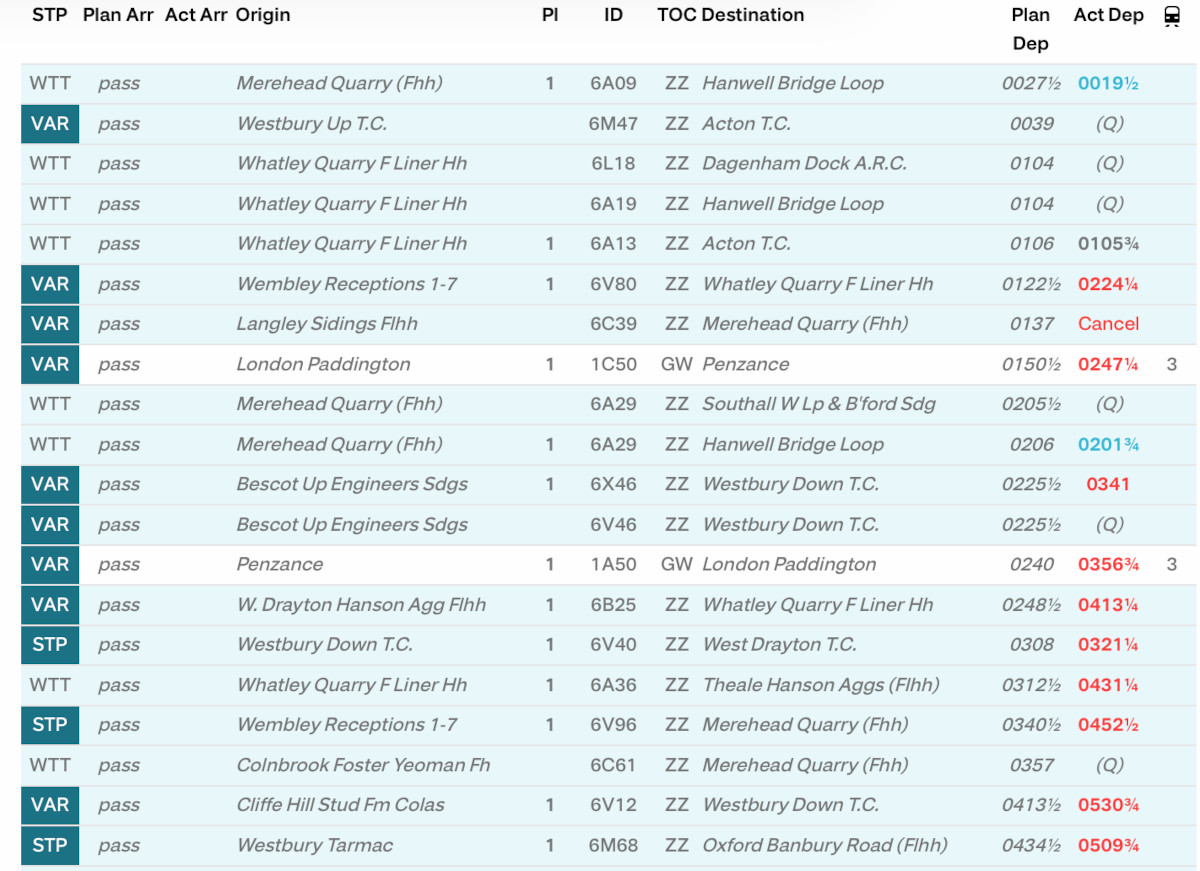
Many thanks for documenting that, Bob - a really interesting study. Real Time trains confirms 14 trains through Melksham in the 6 hours between midnight and 6 a.m. Of those, 11 were signifinatly late.
The "dance" can be done in some places - for example, with St Erth to St Ives where the trains are guaranteed to turn up on time, or in a pattern of lateness if one is late, the next presents late. That requires some exceptional action, such as the notice at St Erth that tells you that the St Ives train won't usually wait, and at St Ives where it's the same train and it automatically synchronises. It is - utterly - out of the practical question in Wiltshire where train passing the ends of the single line need to be combed in, and the trains that use the single line need to present exactly at a convenient time irrespective of delays getting there, and then to be able to escape it at the far end.
Multiple solutions options to increase practical, relaible capacity have been mooted. For more than a very modest further traffic increase, at least one of them and probably more need to be implemented. And of those multiple solutions, to be implemented, a number of them are not on that single track section from last point at Thingley to the first point at Bradford.
| Re: Swindon <-> Westbury service updates and amendments, ongoing discussion - 2026 In "TransWilts line - Swindon, Chippenham, Melksham, Trowbridge, Westbury, Salisbury" [379142/31359/18] Posted by bobm at 14:54, 4th September 2026 Already liked by grahame | |
Left 29 minutes late at 14:47. At least it is running.
| Re: Swindon <-> Westbury service updates and amendments, ongoing discussion - 2026 In "TransWilts line - Swindon, Chippenham, Melksham, Trowbridge, Westbury, Salisbury" [379141/31359/18] Posted by grahame at 14:50, 4th September 2026 | |
14:18 Westbury to Swindon due 15:01
14:18 Westbury to Swindon due 15:01 will be starting late from Westbury.
This is due to this train being late from the depot.
14:18 Westbury to Swindon due 15:01 will be starting late from Westbury.
This is due to this train being late from the depot.
15:14 Swindon to Westbury due 15:58
15:14 Swindon to Westbury due 15:58 will be starting late from Swindon.
This is due to a late running train being in front of this one.
15:14 Swindon to Westbury due 15:58 will be starting late from Swindon.
This is due to a late running train being in front of this one.
| Re: Bristol Temple Meads - station, facilities, incidents and events (merged posts) In "Bristol and Bath (WECA, now WEMCA)" [379140/10737/21] Posted by Phantom at 12:56, 4th September 2026 Already liked by Mark A | |
In terms of usage, it is also quite handy for gigs at the prospect building.
Excellent point - it will make those last trains home slightly easier to catch
| Re: Same word - different meanings - public transport context In "Portsmouth to Cardiff" [379138/32449/20] Posted by stuving at 12:49, 4th September 2026 | |
7. Passenger v Customer
Reeks of consultant speak. If they are called passengers it reminds everybody what the object of the exercise is. Had similar situation in the health service, they are patients and want a medical issue sorted.
Customer tends lean towards a sales opportunity, coffee shops on stations, over-priced branches of M&S in hospitals.
One of the fixed ideas behind privatisation was that BR was run, by engineering and operations, for its own benefit and convenience not the passengers'. I remember hearing one of the privatisers explaining at the time that they had designed the process with minimal barriers to entry (capital both as money and owning equipment), so a group of outsiders could bid for a franchise.
The idea was to bring in people from a retail background, where (it is said) the customer is king and always right. The switch to "customer" was meant to reflect this change of ethos of those running the TOCs, which should start to recognise that they were customer-facing.
Of course that totally misses some important differences. With competent logistics (which you can hire in) to maintain stock levels, you can retail stuff out of your stock room that was manufactured ages ago. It stays as made, with no involvement of the manufacturers until it's been bought and taken (or sent) home.
You can't retail a rail journey that way. You have to keep manufacturing the journey after it's been sold, and while it's going on, until it has finally been consumed. So the manufacturing staff (both engineering and operations) need to be involved throughout. This makes life more difficult, but can't be wished out of relevance.
| Re: A bit out in the sticks In "Railway History and related topics" [379137/32108/55] Posted by Marlburian at 10:21, 4th September 2026 Already liked by Mark A, eightonedee | |
I guess that freight ceasing in 1966 applied to other stations on the DN & S, and Churn just happened to be included. There might have been some agricultural traffic, though in 1943 a siding installed for the benefit of Churn Farm was removed as part of the wartime doubling. C W Judge in An Historical Survey ... of the line says that the station was closed to goods traffic then.
In the past fifty years I've explored most of the line between Upton and Winchester, but for some reason not the bit between Upton and Didcot - until yesterday. It's now a well-surfaced path for cyclists, walkers and horse-riders. One or two stretches of embankment have been reduced to allow sloping access paths, there are several bridges to peer over and the concrete base of what I guess may have been a platelayers' hut.
| Re: Noble (?) failures In "Railway History and related topics" [379136/32454/55] Posted by Mark A at 10:07, 4th September 2026 Already liked by 1st fan | |
OK, I'll bite. The APT was failed by a country that was in fundamentally unserious mode concerning the train and I suspect that many other aspects of railway travel benefitted from the research that produced it. Also, to engineer that tilt mechanism in a purely analogue way. If the trains running on the GWML now were a descendent of the ATP I suspect that everyone would be rather happier with the ambience of the passenger compartments than they are.
Mark
| Re: Imber Bus Day - merged topics, ongoing events and discussion here In "Buses and other ways to travel" [379135/17260/5] Posted by CyclingSid at 10:00, 4th September 2026 Already liked by Mark A | |
British army told to stop non-essential training exercises to save money
Unfortunate timing with Trump reviewing the situation with the Falklands, followed by the Argentinians rising to the bait.
| Re: Noble (?) failures In "Railway History and related topics" [379133/32454/55] Posted by CyclingSid at 09:51, 4th September 2026 | |
Should this be titled like the recent awards; Ignoble failures?
| Congestion on the Melksham single line overnight - 04 Sep 26 In "TransWilts line - Swindon, Chippenham, Melksham, Trowbridge, Westbury, Salisbury" [379132/32455/18] Posted by bobm at 09:31, 4th September 2026 Already liked by grahame, Mark A, Chris from Nailsea, Andy E, JohnM | |
An unusual set of circumstances led to some extended delays around the single line overnight.
Both sleeper services were routed via Melksham and both were running late. The Up sleeper lost half an hour coming through Cornwall while the Down service was delayed by 50 minutes due to an incident east of Swindon. The pair usually cross in Somerset. This morning it was between Trowbridge and Westbury.
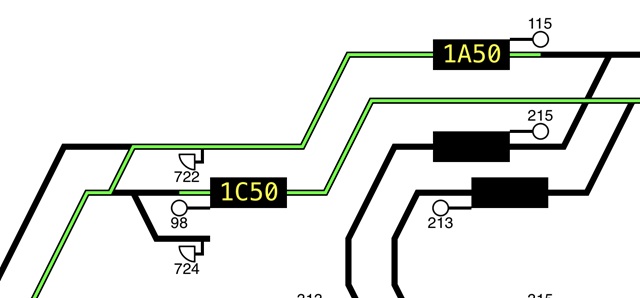
However behind the westbound sleeper was a queue of trains at Chippenham waiting for the single line to clear. A couple of them had been allowed to run early at previous points in their journey. The closure of the line through Chipping Sodbury for overnight engineering work also added to the pressure. The second in the queue was just waiting for the one in front to take the single line before it could continue towards Bath Spa.
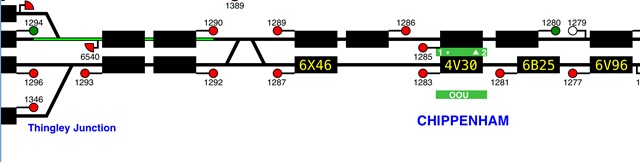
The up sleeper was delayed on the approach to Bradford Junction for 45 minutes while a pair of trains used the single line. The message on Journeycheck suggested it had been delayed by a late running train in front. I suppose it was - by the down sleeper!

In all it took nearly three hours for the congestion to clear as other trains joined the queues at both ends. The worst delay I have seen was a freight train which approached Chippenham 12 minutes early but was 83 minutes late by the time it got to Trowbridge.
In the middle of the night perhaps it doesn't matter so much - but it shows what a knife-edge capacity along the single line is on at times.
| Re: Imber Bus Day - merged topics, ongoing events and discussion here In "Buses and other ways to travel" [379131/17260/5] Posted by Marlburian at 09:19, 4th September 2026 | |
I can't see Imber being returned to civilian habitation as it remains a useful training facility, although, ironically, the army had to construct the nearby "village" on Copehill Down (complete with railway siding and vehicles) to better replicate the sort of buildings, including cellars, that the British Army might have to fight in in Europe).
(And something would need to be done about the poor mobile-phone reception!)
In recent years I've become conscious of the increased use of the central ranges north of Larkhill. (Imber is in the western ranges.) Time was when one could go there on a Sunday and be reasonably sure that they were not being used and one could access the rights-of-way. But on several occasions in the past few years the Salisbury Plain Training Area website has shown no artillery firing taking place, only for me to drive down and find the red flags were up and there were army vehicles whizzing around. A year or two ago the flags were down, so I trudged up the old Salisbury-Devizes road for two miles from Bustard, only to find a barrier was down across it.
Recently the SPTA website has tweaked its guidance, but still does not indicate military use other than firing.
No doubt one might be fairly safe in assuming that the army takes Christmas Day and adjacent dates off, but on most winter days the Plain is not particularly inviting.
| Re: Same word - different meanings - public transport context In "Portsmouth to Cardiff" [379130/32449/20] Posted by bobm at 07:33, 4th September 2026 | |
As has been said… frequently.

| Re: 2 of 3 - rail related but no trains In "The Lighter Side" [379129/32435/30] Posted by grahame at 06:11, 4th September 2026 | |
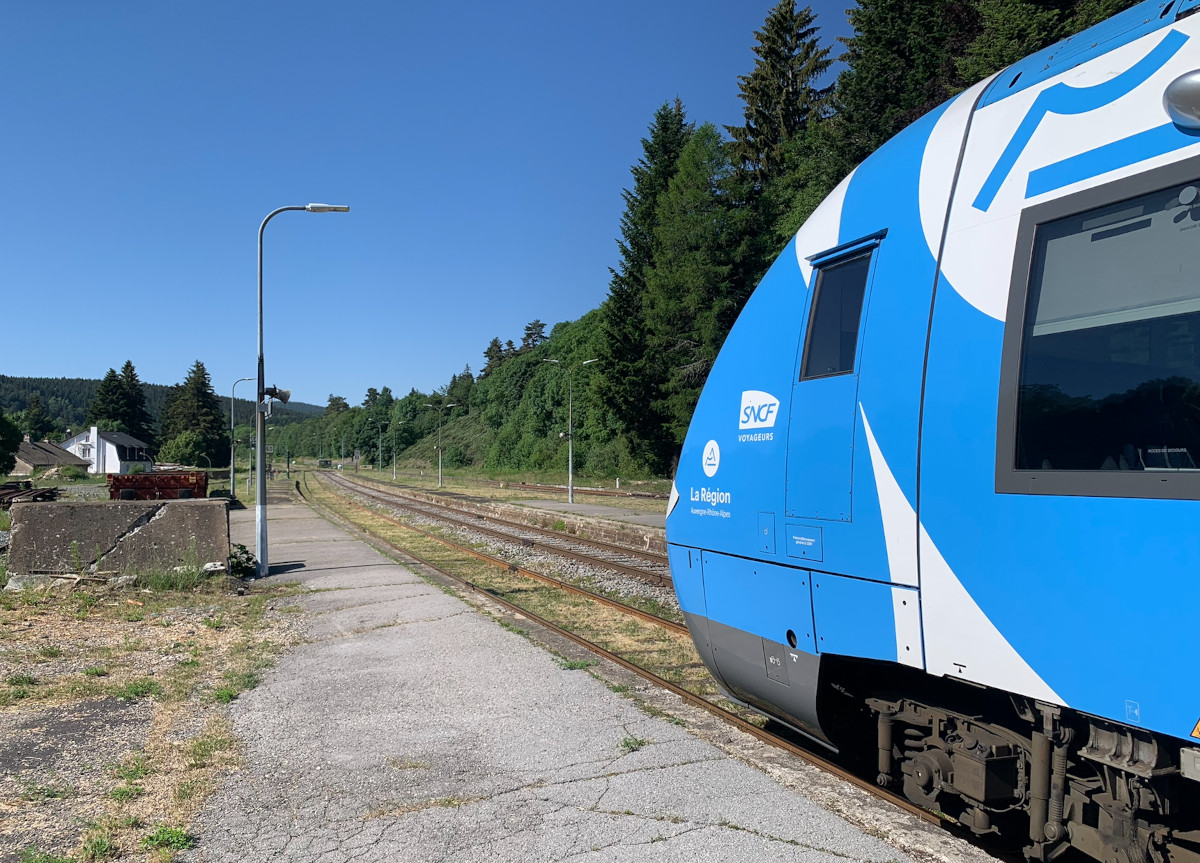
B5 looks to be in France, from the 'Sor' or 'Sort' as the beginning of the possible word 'Sortie' on the sign at the top right of the picture.
There's also the "Pictish symbol signs"! I think that station is La-Bastide-St-Laurent-les-Bains.
Very, very close - you are just two stations along the line. At Langogne we stopped for a crew change, then at La-Bastide-St-Laurent-les-Bains to pass the train coming the other way.
Here is La Bastide:
| Re: Imber Bus Day - merged topics, ongoing events and discussion here In "Buses and other ways to travel" [379128/17260/5] Posted by grahame at 05:58, 4th September 2026 | |
From the BBC:
Imber could be re-opened, then?


British army told to stop non-essential training exercises to save money
The Army has been told to stop "non-essential" training exercises to save money, according to a defence source.
[snip]
A defence source said the plans mean not doing what he called "nice to have training" - like large live fire exercises and rehearsing platoon attacks in UK training areas like Salisbury Plain in Wiltshire and Sennybridge in Wales.
The Army has been told to stop "non-essential" training exercises to save money, according to a defence source.
[snip]
A defence source said the plans mean not doing what he called "nice to have training" - like large live fire exercises and rehearsing platoon attacks in UK training areas like Salisbury Plain in Wiltshire and Sennybridge in Wales.
Imber could be re-opened, then?


This worries me. Not the re-opening of Imber which (if any senior politicians or cool servants have been up there on the 23A) has well connected public transport and housing and a church that could be brought up to modern standards to form the hub of a new town. But also with political decisions taking the opportunism of short(er) term money saving even in a sphere they are apparently committed too. Could money be saved by mothballing the Badminton and Langport cutoffs, with London to the West and South Wales routed via Gloucester, via Bath Spa, and via Honiton?
| Re: Same word - different meanings - public transport context In "Portsmouth to Cardiff" [379127/32449/20] Posted by grahame at 05:49, 4th September 2026 | |
The two words - which are not the same, but which do rile me, when they are misused - are 'regular' and 'frequent'. Regular could be 'once every one hundred years', whereas frequent could be 'every few minutes', for example.
Indeed - we had a regular train service from Swindon to Westbury from December 2006 to December 2013 - it ran about every 12 hours. It has improved since then, but to this day we remain in search of a frequent service, for example as suggested by the Bath and Wiltshire Metro which would run every 30 minutes, though perhaps not completely regular because there might be a gap from 00:30 to 04:30 midweek.
| Noble (?) failures In "Railway History and related topics" [379126/32454/55] Posted by grahame at 05:31, 4th September 2026 | |
Key Facts
Name Origin: Named after Edsel Ford, the son of founder Henry Ford and former president of the company.
The Launch: Debuted on September 4, 1957 (known as "E-Day"), following a massive, highly publicized hype and teaser campaign.
Unique Features: Famous for its polarizing vertical "horse-collar" grille, rolling-dome speedometer, and the Teletouch push-button automatic transmission located right in the center of the steering wheel.
Models Offered: Included upscale models like the Citation and Corsair, as well as lower-priced choices like the Pacer and Ranger.
The Failure: Became a legendary corporate failure due to poor timing during an economic recession, quality control issues on shared assembly lines, and a design that public consumers largely disliked. Ford lost hundreds of millions of dollars before discontinuing the brand in November 1959
Name Origin: Named after Edsel Ford, the son of founder Henry Ford and former president of the company.
The Launch: Debuted on September 4, 1957 (known as "E-Day"), following a massive, highly publicized hype and teaser campaign.
Unique Features: Famous for its polarizing vertical "horse-collar" grille, rolling-dome speedometer, and the Teletouch push-button automatic transmission located right in the center of the steering wheel.
Models Offered: Included upscale models like the Citation and Corsair, as well as lower-priced choices like the Pacer and Ranger.
The Failure: Became a legendary corporate failure due to poor timing during an economic recession, quality control issues on shared assembly lines, and a design that public consumers largely disliked. Ford lost hundreds of millions of dollars before discontinuing the brand in November 1959
https://en.wikipedia.org/wiki/Edsel
There have been some noble (and nit so noble) failures in the railway world, and some of them are associated with great engineers who had other magnificnent successes but these cases results were not as planned:
Leader
Drumm Electric Train
Bideford, Westward Ho! and Appledore
4DD trains
Brighton and Rottingdean Seashore Electric Railway
Advanced Passenger Train
Waterloo and Whitehall Railway
Class 769 trains
Brill Branch
Cardiff Railway (Treforest)
