








| Re: Commuter thanks stranger who did CPR after cardiac arrest at Liverpool Street Posted by Ralph Ayres at 19:19, 6th April 2026 |     |
Just to point out that you don't need to be an expert to use one of these (though it certainly helps you to stay calm!). A bit of familiarity is useful, as is being able to recognise that it needs using, but the machine itself talks you through it and checks if it should be used.
One barrier to availability is that while funding to buy them is relatively easy to generate, the ongoing expense of replacement batteries as they pass their best before date is harder, being somewhat less glamorous. I know of several out of use for that reason.
| Commuter thanks stranger who did CPR after cardiac arrest at Liverpool Street Posted by Chris from Nailsea at 16:39, 6th April 2026 | |
From the BBC:
Commuter thanks stranger who restarted his heart
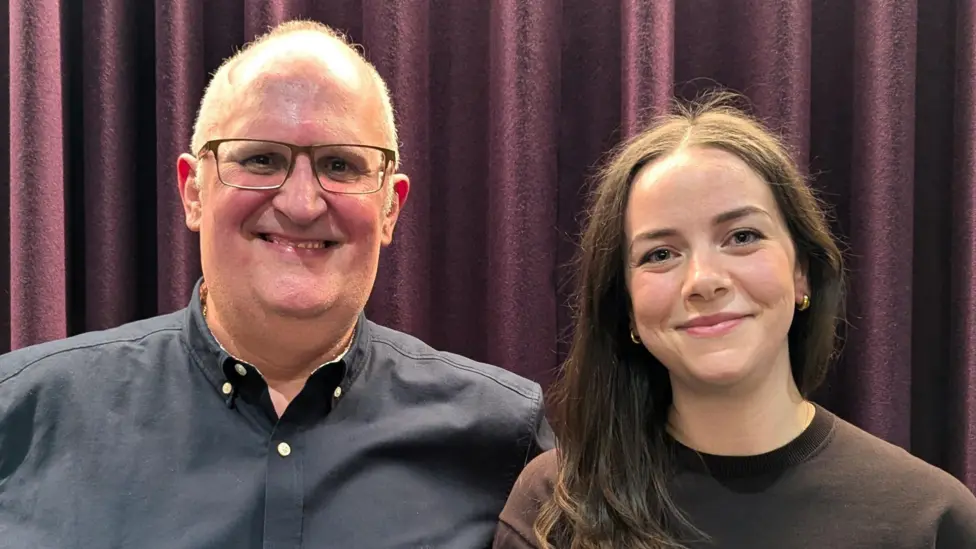
Spencer Stevenson believes he would have died without Hollie Page's expert help
Spencer Stevenson nearly died on his way to work one morning in December, as he suddenly suffered a cardiac arrest after getting off his train.
"I got to the top of the stairs and felt a bit dizzy. I remember thinking I'm going to fall over. I got onto one knee and then, that was it, I don't remember anything else."
As it happened, he was in the right place at the right time. "All the stars aligned that morning. But Hollie is the reason I'm still here."
Hollie Page, a cardiac physiologist at Bart's Hospital, happened to pass him as he lay on the concourse of Liverpool Street station.
With the help of other passers-by, she performed chest compressions and used a public defibrillator to restart his heart, bringing him back.
The 54-year-old has since made a full recovery.
Stevenson told the BBC he was "so lucky to have Hollie there, who knew what she was doing, and the defibrillator on hand, that I've come out of it virtually unscathed...it's crazy."
Page said she had spotted Stevenson lying on the ground unconscious - and thought "this is something that I can actually help with".
"He had no pulse. Three other people were already helping. We all went straight into resus [resuscitation] mode. CPR is a big part of the work I do. You go into autopilot. Your training kicks in."
After four rounds of CPR and two shocks, Stevenson came round and began to talking. "We got a return of spontaneous circulation," Page said. "It was an incredible moment."
Afterwards, Page went to work and Stevenson was taken to the Royal London Hospital "awake and well enough to call my wife Karen from the ambulance".
He said words were "too small to express how massively grateful" he was to Page and the others who saved his life.
Joining Stevenson in speaking to the BBC, Page said: "It's always a strange feeling...but it does really make you feel like what you've done has been worthwhile and you really have made a difference."
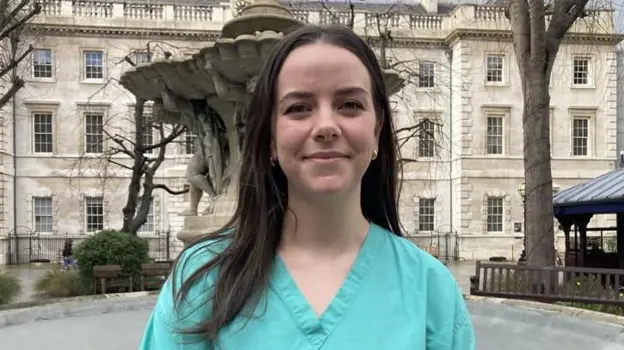
Cardiac Physiologist Hollie Page hopes more people will get the skills to save lives
According to NHS England, fewer than one in 10 people who have a cardiac arrest outside hospital survive.
Defibrillators were rolled out in Tube and railway stations across London. However, there are large gaps in provision and many neighbourhoods do not have any at all.
Stevenson is now campaigning for more defibrillators to be installed in public places. "Luck was smiling on me that morning. But we shouldn't rely on luck. Every office should have at least one AED (automated external defibrillator. If you're a manager, take five minutes to ask whether your building has one, and make sure your team knows where it is. You might save someone's life."
Page also wants more people to learn resuscitation skills, either through first aid training or even at home. "There are so many resources that are online - and they are skills that will save someone's life."
Spencer Stevenson believes he would have died without Hollie Page's expert help
Spencer Stevenson nearly died on his way to work one morning in December, as he suddenly suffered a cardiac arrest after getting off his train.
"I got to the top of the stairs and felt a bit dizzy. I remember thinking I'm going to fall over. I got onto one knee and then, that was it, I don't remember anything else."
As it happened, he was in the right place at the right time. "All the stars aligned that morning. But Hollie is the reason I'm still here."
Hollie Page, a cardiac physiologist at Bart's Hospital, happened to pass him as he lay on the concourse of Liverpool Street station.
With the help of other passers-by, she performed chest compressions and used a public defibrillator to restart his heart, bringing him back.
The 54-year-old has since made a full recovery.
Stevenson told the BBC he was "so lucky to have Hollie there, who knew what she was doing, and the defibrillator on hand, that I've come out of it virtually unscathed...it's crazy."
Page said she had spotted Stevenson lying on the ground unconscious - and thought "this is something that I can actually help with".
"He had no pulse. Three other people were already helping. We all went straight into resus [resuscitation] mode. CPR is a big part of the work I do. You go into autopilot. Your training kicks in."
After four rounds of CPR and two shocks, Stevenson came round and began to talking. "We got a return of spontaneous circulation," Page said. "It was an incredible moment."
Afterwards, Page went to work and Stevenson was taken to the Royal London Hospital "awake and well enough to call my wife Karen from the ambulance".
He said words were "too small to express how massively grateful" he was to Page and the others who saved his life.
Joining Stevenson in speaking to the BBC, Page said: "It's always a strange feeling...but it does really make you feel like what you've done has been worthwhile and you really have made a difference."
Cardiac Physiologist Hollie Page hopes more people will get the skills to save lives
According to NHS England, fewer than one in 10 people who have a cardiac arrest outside hospital survive.
Defibrillators were rolled out in Tube and railway stations across London. However, there are large gaps in provision and many neighbourhoods do not have any at all.
Stevenson is now campaigning for more defibrillators to be installed in public places. "Luck was smiling on me that morning. But we shouldn't rely on luck. Every office should have at least one AED (automated external defibrillator. If you're a manager, take five minutes to ask whether your building has one, and make sure your team knows where it is. You might save someone's life."
Page also wants more people to learn resuscitation skills, either through first aid training or even at home. "There are so many resources that are online - and they are skills that will save someone's life."
